Some cases stay with you — not because they are complex, but because they demand restraint.
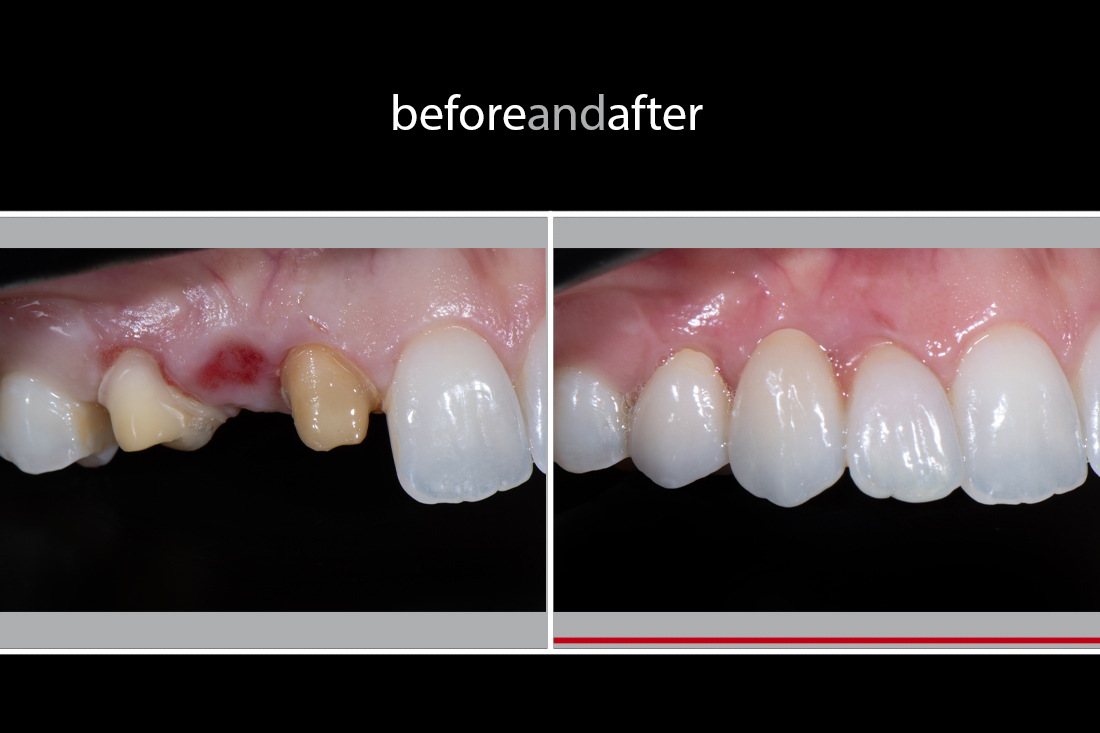
This three-unit maxillary bridge (14–12) was originally shared in the Before & After section and generated strong engagement. The clinical challenge was not novelty. It was integration — matching translucency, surface character, and soft-tissue architecture in a high-expectation aesthetic zone.
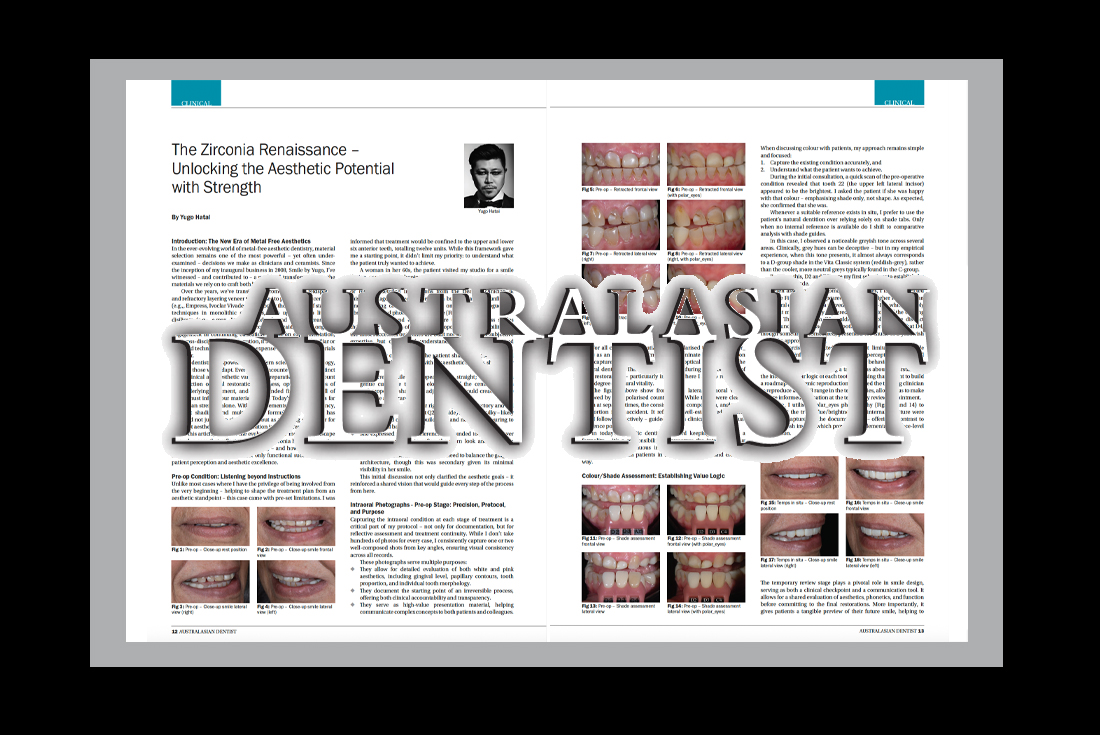
The full 6-page case report has now been published in Australasian Dentist (Mar/Apr 2026).
The article covers:
- Early adoption of e.max Ceram Art within an established workflow
- Staged bone grafting and soft-tissue management
- A controlled zirconia protocol (e.max ZirCAD Prime + Noritake CZR)
- Use of pink structure ceramics for papilla and interproximal refinement
- Use of white structure ceramics for surface detail, anatomical control, and subtle modification
- A multi-angle shade protocol using polarised imaging
- Clinical try-in considerations when gingival ceramics are involved
- Detailed patient feedback
The objective was simple: create a restoration that disappears.
As digital workflows become increasingly standardised, the differentiator is no longer software or strength. It is judgement — when and where to layer, when and where to restrain, and when and where to introduce refinement.
For clinicians and technicians working in complex aesthetic crown and bridge cases, the full breakdown is available below.
→ [Read the published article]
→ [View the original blog post]